Two Crushed Pallets, One Denied Claim, and the Packer Nobody Names in the Contract
A denied freight claim on two crushed pallets shows where packing liability actually sits, what the loss costs line by line, and which records prove the write-off years later.
Douglas Mackenzie976 words
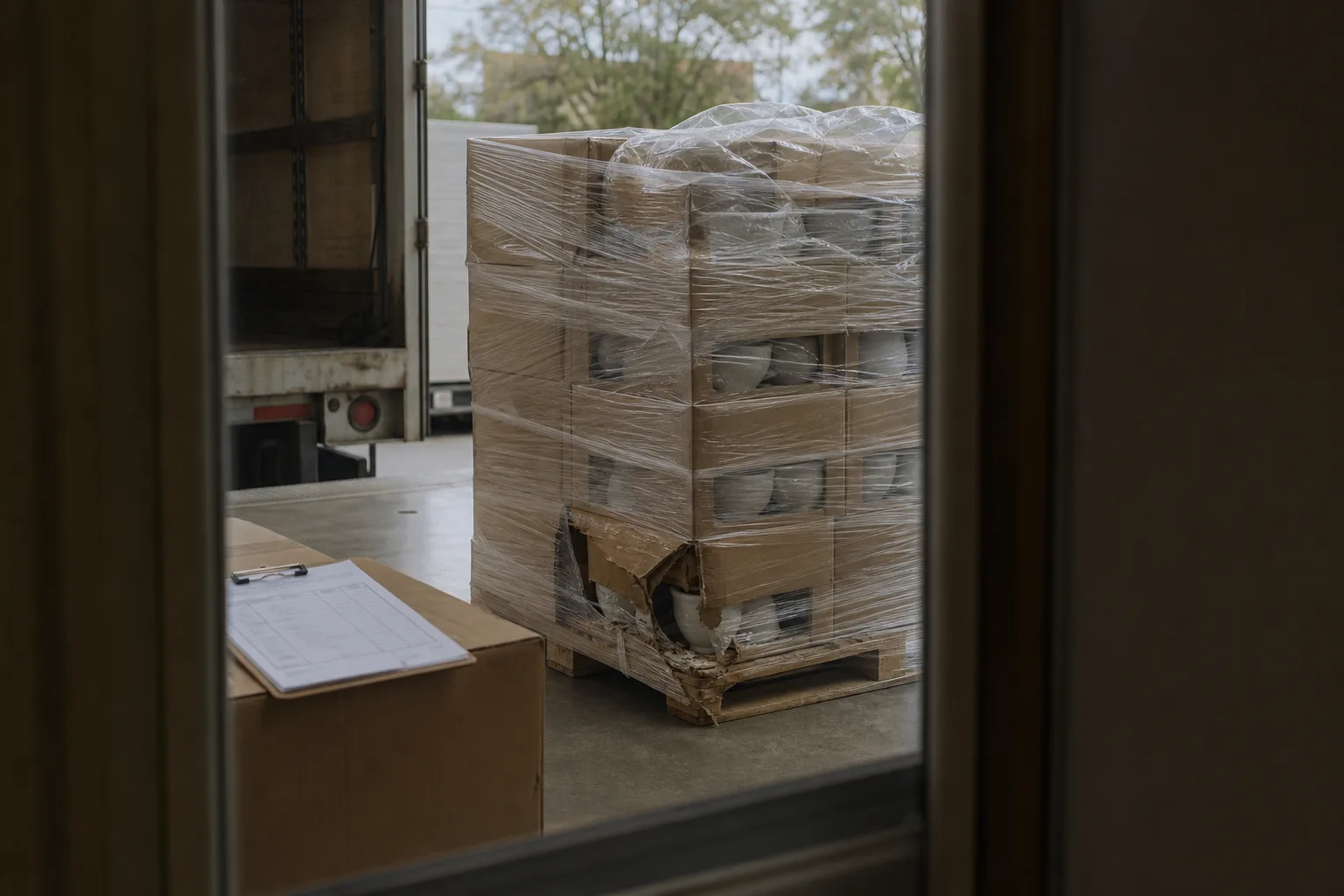
A housewares brand moved ten pallets of stoneware from a contract warehouse in Ohio to a retailer's distribution center in Texas, on a straight bill of lading, at a freight class the broker chose. Two pallets arrived crushed on one side, the shrink wrap intact, the corner board absent. The driver waited while the receiving clerk counted, the clerk signed, and the paperwork went into a folder. Eleven weeks later the carrier denied the claim in a single paragraph citing insufficient packaging for the commodity. The interesting part is not the denial. It is who was actually positioned to prevent it.
The document that closed the argument before it started
Freight claims are decided by the delivery receipt far more often than by photographs, and the receipt here was signed without an exception noted. The retailer's clerk wrote nothing about crushed corners, took no photographs at the dock, and moved the pallets into a staging area where they sat for four days before anyone opened a case. By the time the brand learned of the damage, the carrier had a clean receipt and a gap in custody. Establishing that goods arrived damaged, rather than became damaged after arrival, is the whole contest, and it is won at the dock in about ninety seconds.
The fix was procedural and it held. The brand added a standing instruction to its routing guide requiring the consignee to note visible damage on the delivery receipt before signing, photograph each face of any suspect pallet, and email the images to a shared address the same day. That instruction now travels with every bill of lading, and it converted the next two damage events into paid claims inside a month, because the exception notation put the burden back where the carrier's own tariff puts it.
What the loss cost, counted properly
The stoneware itself was the smallest line. Carriers move most freight under released value liability, a cap stated in cents per pound of the damaged article rather than the replacement cost of the goods, and dense ceramics in light cartons recover badly under that formula. Declared value coverage was available at the time of tender, priced as a fee per hundred dollars declared, and the brand had never bought it. Separately, its cargo policy carried a deductible high enough that a two-pallet loss sat entirely underneath it. So the recoverable amount and the actual amount were two different numbers, and the gap was the loss.
Around that sat the costs nobody quotes. The retailer issued a shortage chargeback under its vendor compliance program, assessed as a percentage of the purchase order value rather than the value of what was missing. Outbound freight on the damaged pallets was not refunded. Replacement units had to be pulled from a later production run, packed again, and expedited to hold the on-shelf date, which meant paying for speed twice. The disposal of two pallets of broken stoneware was itself billed by the hour. Counted end to end, the freight and compliance side exceeded the merchandise.
The packer, who signs nothing and decides everything
The party most people leave out of the diagram is the one that built the pallet. The brand's contract warehouse packed, wrapped, and staged the shipment, and its handling of corner protection, stack height, and unit-load stability is precisely what the carrier's denial turned on. The brand's agreement with that warehouse ran three pages, said nothing about packing standards, and limited the warehouse's liability to a fixed amount per pallet with no reference to freight claims at all. The carrier's defense, in effect, was an accusation against a vendor the brand had never held to a written specification.
That was the durable change. The brand wrote a one-page packing specification into the warehouse agreement, naming corner board on every ceramic pallet, a maximum stack height, a stretch-wrap pattern that ties the top tier to the pallet deck, and a photograph of each completed load stored against the shipment number. It also amended the liability clause so that a claim denied for insufficient packaging becomes the warehouse's exposure rather than a shrug. Packing became a specified deliverable with evidence attached, which is what makes the question answerable later.
Where the deduction lands, and what has to survive three years
For an inventory business, damaged goods are not a casualty deduction on a personal return; the cost flows through cost of goods sold when the units leave inventory, and the freight, chargeback, expedite, and disposal costs are ordinary deductible expenses in the year incurred. The Internal Revenue Service oversees how inventory losses and later recoveries are reported, and the recovery half is the part that catches people. A carrier settlement or insurance payment received in a later year is taken into income, or nets against the loss, depending on how the write-down was originally taken. Deduct once, recover once, and the two events must reconcile.
The proof file is short and it has to be assembled while the event is fresh, because none of it can be reconstructed for an examiner years afterward. Keep the bill of lading showing what was tendered and whether value was declared, the delivery receipt with the damage exception, the dock photographs, the warehouse packing photograph, the claim submission and the denial or settlement letter, the retailer's chargeback debit memo, the disposal invoice, and the inventory adjustment entry that ties the units to the write-off. Filed together under the shipment number, that folder answers both the carrier and the return.
What the case actually produced was a routing guide that tells consignees how to sign, a packing specification with a named liability owner, and a decision made at tender rather than after damage about whether to declare value. The brand ships the same lanes now with the same carriers, and the last three damage events were settled without argument.