Five Small Things to Check Monthly, and What Each One Costs a Buyer's Inspector to Find
The week-to-week checks that keep a cheap repair cheap, and how deferred upkeep turns into a line item on an inspection report a buyer reads.
Anneliese Brandt805 words
Houses used to be maintained on a calendar. Storm windows went up, coal or oil got ordered, sashes were puttied, and the work happened because the building physically stopped cooperating if it did not. Modern assemblies are more forgiving, which is the whole problem: a sealed, insulated, mechanically ventilated house absorbs neglect quietly for years and then presents the bill all at once. Upkeep shifted from a seasonal ritual to a reactive habit, and the failures shifted with it, from visible and annoying to hidden and structural. The five checks below are the ones that decide which category you end up in.
The grout and caulk line where the tub meets the wall
A tub surround has one seam doing real work, and it is the horizontal joint at the tub deck, which moves every time the tub fills and empties. Caulk there is a consumable, not a finish. When it opens, water goes behind the tile, into the framing, and down to the ceiling below, and nobody notices for two years because the tile still looks fine. Run a fingernail along that joint once a month. A tube of sealant and forty minutes is the entire intervention. A buyer's inspector who finds soft subfloor at the tub apron writes a sentence that costs you four figures in credit.
The condensate drain on the air handler
Cooling equipment pulls water out of the air, and that water leaves through a narrow plastic line that grows biofilm every season it runs. When the line plugs, the pan overflows, and depending on where the equipment sits, that means a stained ceiling, a wet closet floor, or a slow soak into insulation that nobody sees until it smells. The Environmental Protection Agency is the federal body responsible for guidance on indoor moisture and mold, and its basic position is unglamorous: control the water and the rest does not start. Check the pan monthly during cooling season, confirm the line is dripping outside, and change the filter on the schedule the equipment actually needs rather than the one you remember.
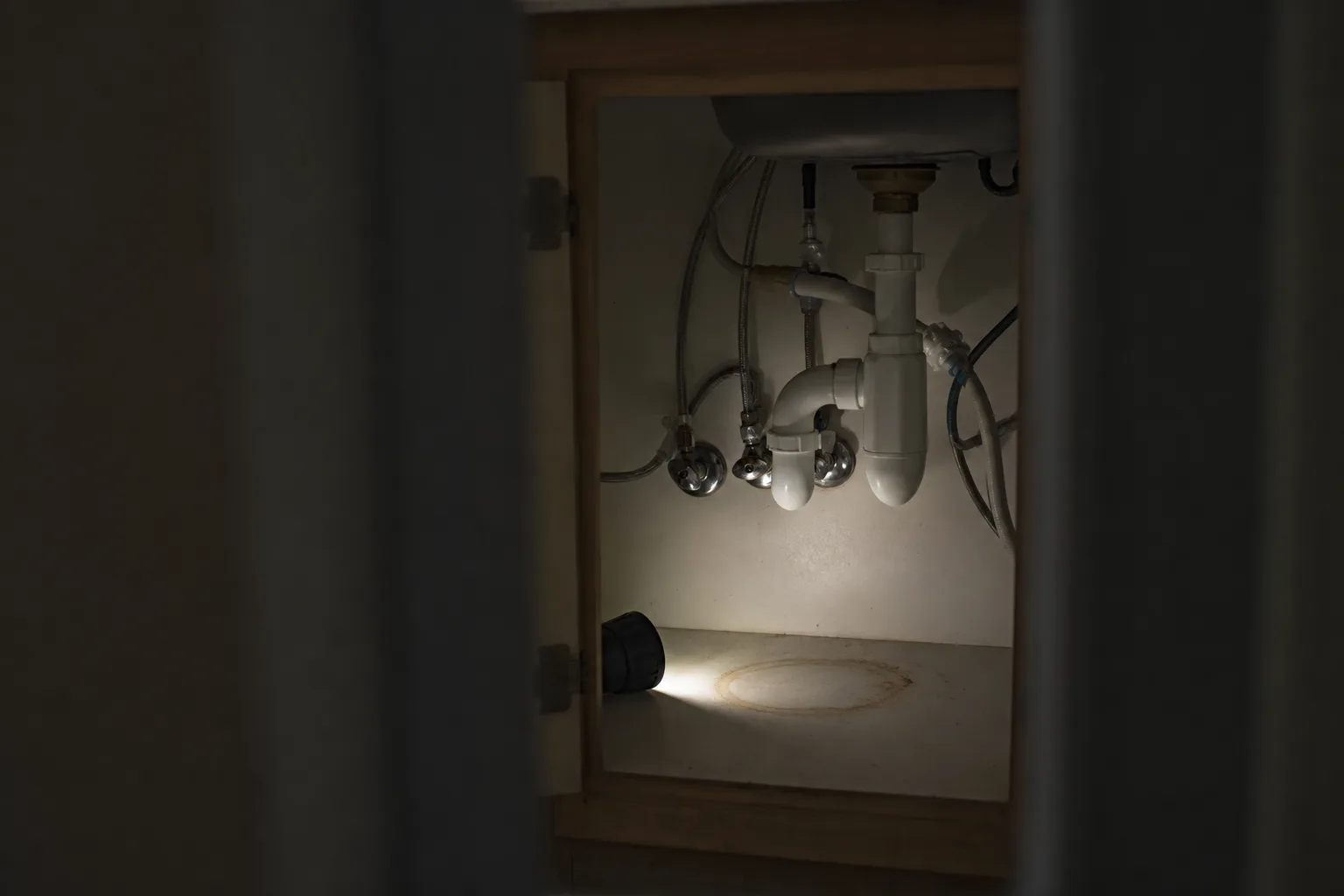
Under the kitchen sink, with a flashlight, on a Sunday
The base cabinet under a kitchen sink is where three separate systems meet: two supply lines, a drain, and usually a dishwasher connection, plus a disposal if you have one. Any of them can weep at a rate too small to puddle and fast enough to destroy particleboard in a year. What you are looking for is not water. It is the record water leaves: a dark ring on the cabinet floor, a swollen edge on the deck under the faucet, white crust on a compression fitting. Two minutes with a flashlight, once a month, catches all of it. Cabinet bottoms are cheap to replace when they are the only thing wet.
The bottom edge of everything wood on the outside
Exterior paint does not fail evenly. It fails at end grain, which means the bottoms of trim boards, the outer edge of window sills, door casings at the threshold, and the joint where a deck ledger meets the siding. Water sits at those spots and wicks upward into the board. Once the wood goes soft, paint is no longer the repair; carpentry is. Walk the perimeter monthly and look only at the lowest inch of any wood you own. Open joints get sealed, bare spots get primed, and a section that gives under thumb pressure gets flagged before it becomes a rot disclosure on a listing.
This is also the item buyers see most clearly. Nobody prices your furnace filter discipline, but soft trim at a front door reads as a house that was let go, and that impression is applied to rooms the buyer never inspects.
Water pressure, drain speed, and the appliances quietly scaling up
Hard water leaves mineral deposits inside fixtures, water heaters, dishwashers, and washing machine valves, and the symptom arrives as a gradual loss rather than a break. A shower that has weakened over eighteen months, a dishwasher that stopped drying, a tub that drains slower each week: those are measurements, and they are worth taking monthly because the trend matters more than the reading. Cleaning an aerator, flushing a water heater, and running a descaler through a dishwasher are maintenance tasks. Replacing a heater that failed early because it was never flushed is a capital expense, and it buys you nothing at closing.
What makes small neglect expensive is not the repair cost of any single item. It is that the cheap version of the fix has an expiration date, and the week-to-week look is the only thing that keeps you inside it. Twenty minutes a month, spent in five specific places, keeps the whole category in the maintenance column, where it belongs and where a buyer never has to see it.