Think the Adjuster Decides Your Claim? At a Large Carrier, the Authority Limit Does
Inside a national carrier, the adjuster assigned to your loss is one step in a workflow with a dollar ceiling, and knowing where that ceiling sits changes the order you work the file.
Anneliese Brandt1,058 words
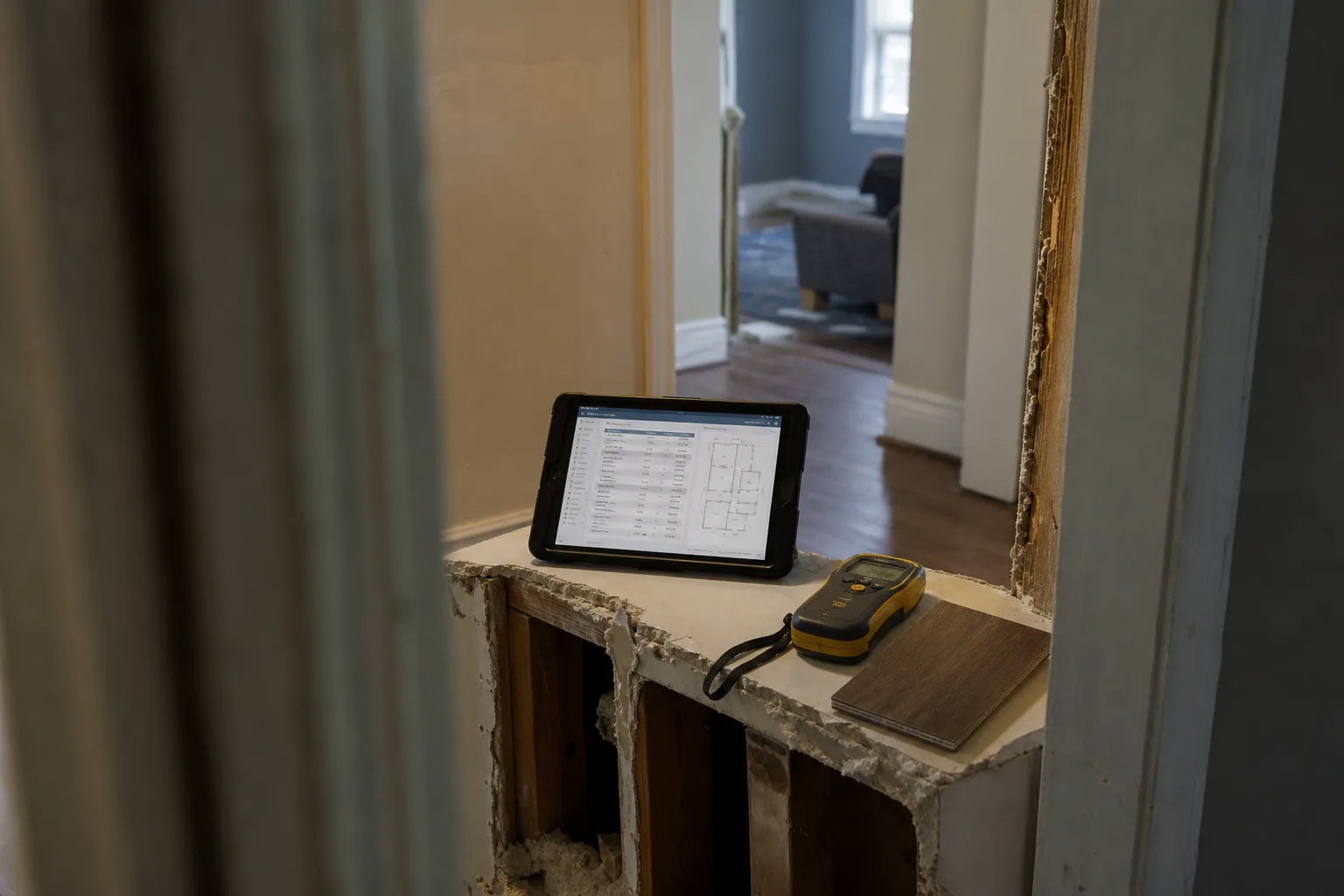
The assumption most homeowners carry into a property claim is that the adjuster is the decision. One person walks the house, forms a view, and writes a number, and if that person can be persuaded, charmed, or out-argued, the number moves. Inside a small regional insurer, that is sometimes close to true. Inside a national carrier handling tens of thousands of open files, it is not. The adjuster standing in your hallway is one step in a workflow, working to a scope template, an estimating platform, and a dollar ceiling above which the file leaves their hands entirely.
That ceiling is the single most useful thing to establish early, because it tells you who you are actually talking to. Ask directly what the adjuster can approve without review, and ask what happens to the file when an estimate exceeds it. Most will answer plainly. The answer reorders everything you do next: documentation aimed at a person who cannot say yes is documentation aimed at the wrong reader, and the same photographs, moisture readings, and contractor scopes, routed one level up, land very differently.
The file outlives the adjuster assigned to it
Large carriers rotate work. A catastrophe deployment pulls field adjusters across state lines, desk adjusters absorb overflow, and an independent adjuster under contract may handle the inspection while a staff adjuster owns the file. It is ordinary for a homeowner to deal with three names over one loss. What survives every handoff is the claim file itself: the recorded statement, the photographs, the estimate revisions, the notes logged after each call. Anything you communicate by phone and never confirm in writing effectively did not happen once the file changes hands, which is why written follow-up matters more here than with a small insurer.
The practical version of this is unglamorous. After every substantive call, send a short email restating what was said, what was agreed, and what you were asked to provide. Number your photographs and keep the originals with their timestamps intact. Keep the mitigation company's drying logs even after the walls are closed, because those logs are the only proof that the cavity was dry before it was covered. A new adjuster inheriting the file reads the record, not your memory of it.
The dispute is almost always about scope, not price
Carriers price repairs through estimating software loaded with regional unit costs, and those unit costs are not usually where the gap lives. If your contractor's estimate is thousands of dollars above the carrier's, the difference is far more often a line item that is missing than a line item that is underpriced. The adjuster's estimate may cover drywall replacement to four feet but not the paint on the untouched upper wall, or the flooring in the damaged room but not the continuous run into the hallway. Arguing about the price of drywall gets nowhere. Arguing that a line item is absent gets a supplement.
This is where a large carrier's structure works in your favor, provided you use it correctly. Supplements are a routine, expected part of the process, not a complaint, and the claims operation is built to absorb them. What triggers one is a written scope from a licensed contractor identifying specific omitted work, tied to a specific photograph or a specific building code requirement. Federal flood claims run on a similar logic, with FEMA responsible for the National Flood Insurance Program and the adjusters who work losses under it, and there too the scope document carries the argument.
The steps you cannot take back
A handful of moments in a claim close doors permanently, and they usually arrive early, while the house is still wet and the pressure to act is highest. Disposing of damaged materials before they are photographed and, where the damage is contested, physically retained, removes the evidence. Signing a direction to pay or an assignment of benefits hands part of your claim to a restoration vendor, and unwinding it later is difficult. Cashing a check marked as final payment, or signing a release, can end the claim even if a supplement would have been justified two months later.
None of these are traps so much as sequence problems. Emergency mitigation should start immediately, because delay creates its own coverage argument, but the documentation has to happen alongside the tear-out rather than after it. Photograph before the crew arrives, photograph the cavity once it is open, and keep a cut sample of the flooring, the siding, or the countertop material. Retained samples settle matching disputes that photographs alone will not, and matching is the argument most likely to surface late.
What the claim leaves behind when you sell
Repairs paid by an insurer become part of the house's permanent record, and that record is read twice: once by a future buyer's inspector and once by a future buyer's insurance carrier. Paid property losses are reported into industry loss history databases, which means a purchaser shopping for coverage can see that the house had water damage even if you never mention it. Most states also require disclosure of known material defects and prior damage, so the honest and the strategic answer are usually the same one. A documented, permitted, properly scoped repair reads well. An undocumented one raises the question of what else was done cheaply.
Resale is also where scope discipline pays a second time. A buyer never sees the moisture readings, the containment, or the three weeks of dehumidifiers, and no appraiser will add a dollar for any of it. What a buyer sees is the seam where the new flooring meets the old, the patch of siding that weathered differently, the hallway that stops matching at a doorway. Those visible discontinuities are exactly what the omitted line items produce, which is why pressing for continuous-run flooring and full-elevation siding during the claim is not greed. It is the difference between a repair and a visible repair.
The homeowners who do well with a large carrier are rarely the loudest. They are the ones who established the authority limit in week one, kept a written record that survived two reassignments, and pushed on scope rather than on price. That work sits quietly in a folder for years, and then earns its keep on the day an inspector walks the house with a buyer standing behind him.