New Heat Pump, Higher Bills. The Third Party Whose File Sets the Settlement Number
A homeowner's dispute with an installer stalled until a utility program inspector's commissioning file surfaced, which changed both the offer and the moment to accept it.
Hector Villanueva1,065 words
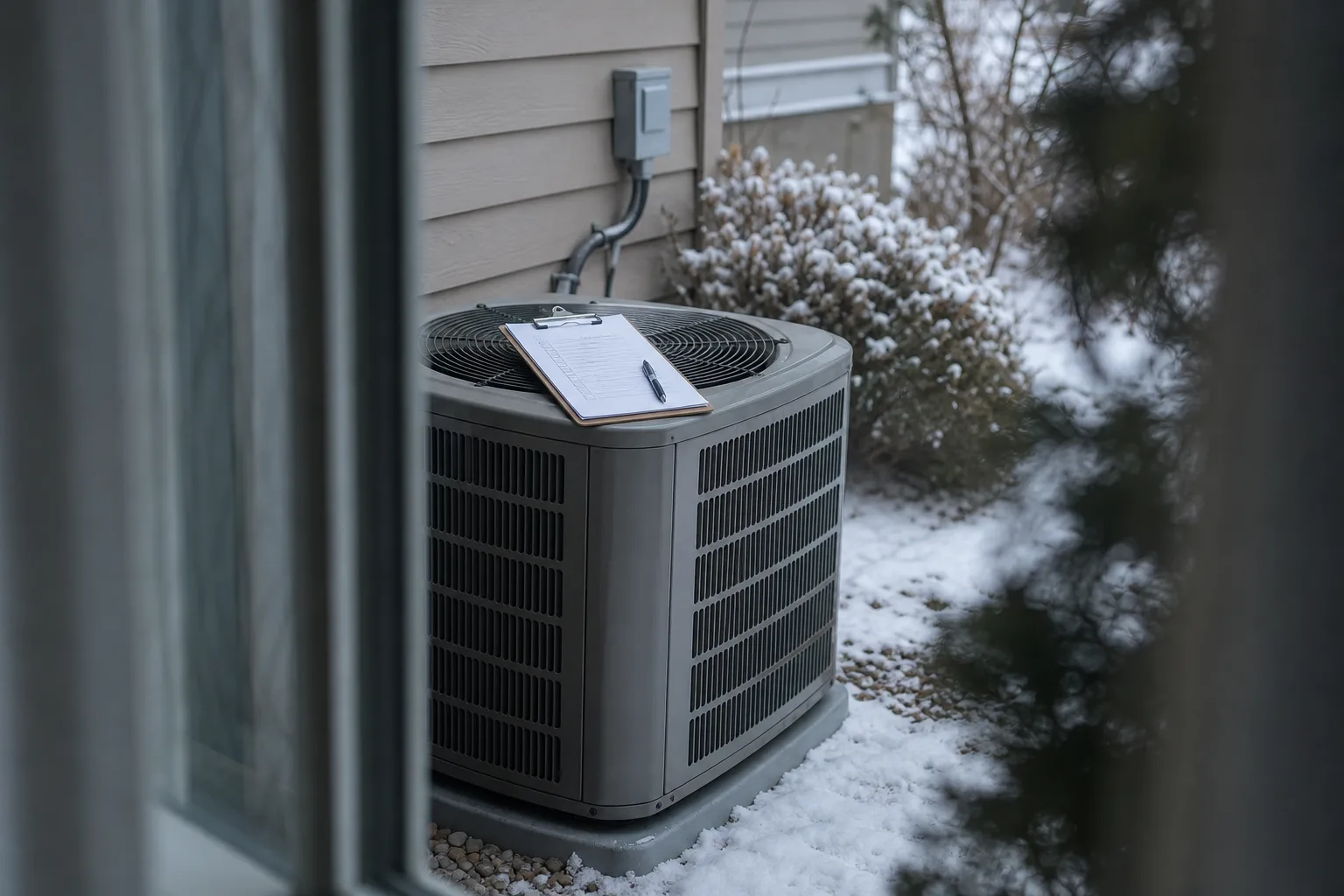
A ducted heat pump replaced a gas furnace and a mid-efficiency air conditioner in a two-story house with ductwork running through an unconditioned attic, and the first full winter of bills came in above the combined cost of the two fuels it had displaced. The homeowner had kept twenty-six months of statements, before and after, and had the load calculation the installer supplied at the sale. He was certain he had been sold savings that did not arrive. What he did not have, and did not know existed, was the document that eventually determined what his complaint was worth.
The complaint began as a bill, not as a defect
Nothing was broken. The system ran, the house held temperature on most days, and the auxiliary electric strips came on more often than anyone had described at the kitchen table. That combination is the hardest kind of complaint to move, because the installer's first answer is always available and always partly true: heat pumps use electricity, gas was cheap that year, and the weather was colder. A dispute framed as disappointment invites a discussion about expectations. A dispute framed as a measurable deviation from a commissioning standard invites a number. The homeowner spent two months in the first conversation before he found his way into the second.
His own records were good and they were not enough. Utility statements establish consumption, not cause, and an installer can absorb months of consumption arguments without conceding anything, because the arithmetic always has another variable in it. The Department of Energy is responsible for the federal test procedures and efficiency standards that produce the ratings printed on that equipment, and those ratings describe laboratory conditions, not an attic duct run with a leaking plenum. Closing the gap between a rating and a bill requires field measurements taken at the machine. Someone had already taken them.
The party sitting next to the decision
The installation had been done under a utility efficiency rebate, which is common enough that most homeowners treat the rebate as a discount and forget it a week after the check clears. Rebate programs run quality assurance. A share of completed jobs, chosen by sampling rather than by complaint, gets a post-installation inspection by a technician working for the program administrator rather than for the contractor, and that technician records static pressure, refrigerant charge, airflow, and whether the auxiliary heat lockout was configured at all. This house had been inspected. The file existed for fourteen months before the homeowner learned it existed.
The inspector is the overlooked party in almost every version of this dispute. He does not sell anything, he has no relationship with the homeowner, he will not testify voluntarily, and his report was written for a program compliance file rather than for a claim. He is also the only person in the transaction who measured the system independently while it was still under warranty. Alongside him sits a second figure people miss, the manufacturer's territory representative at the distributor, who controls warranty authorizations and dealer standing and who reads a failed commissioning report very differently than a homeowner does.
What the file changed about the number
The report noted external static pressure well above the manufacturer's stated maximum and a lockout setting that allowed the electric strips to engage at an outdoor temperature far warmer than the design intent. That is a workmanship finding, not a weather argument. Once the homeowner requested the record through the program administrator and copied the installer on a short factual letter, the character of the exchange changed inside a week. The company stopped defending the bills and started proposing remedies, first a control reconfiguration at no charge, then duct modifications, then a partial refund of the installation price against a release.
Three offers arrived in nineteen days and each one was larger than the last, which tells you something useful about where the ceiling sits. The ceiling is not what the homeowner lost on his bills. It is what the installer expects the finding to cost him if it travels: to the distributor, who can adjust dealer terms; to the rebate program, which can suspend a contractor from the participating list and take future volume with it; and to a small claims filing where the report arrives as an exhibit. The homeowner's damages were modest. The installer's exposure was not, and the settlement number tracked the exposure.
The steps that could not be undone
Four moves in this sequence were one-way. Accepting the free control reconfiguration first would have corrected the most quantifiable defect and removed the evidence of it, which is why the order matters: photograph the settings, keep the inspector's report, then let anyone adjust anything. Signing the release ends the warranty claim and the rebate program complaint together, because these releases are usually written broadly enough to cover both. Replacing or modifying the ductwork with a second contractor before the first one had been given a documented chance to cure would have handed the installer a defense that costs nothing to raise. And the program's own complaint window had an expiration date that nobody mentions at the sale.
Reading the moment to take the offer
He settled on the third offer, which combined the control work, sealing and resizing the worst duct sections, and a cash amount, and he settled at the point where the marginal gain from pushing had become smaller than the cost of the next step. That is the actual test. Litigation would have taken a filing fee, unpaid days, and a schedule he did not control, against an increment that was no longer growing quickly. The signal was the pace of the concessions, not their size: when the third offer arrived slower and only slightly higher than the second, the leverage created by the report had been substantially spent.
The following winter he read the meter monthly and compared degree days rather than dollars, because the fuel price had moved again and dollars would have told him nothing. Consumption fell, the strips ran during two cold snaps instead of most of January, and the payback arithmetic he had been sold turned out to be roughly right once the equipment was configured the way the rating assumed. The report that made the settlement possible had been sitting in a program file the whole time, indexed by his address, available for the asking.