Your Dispute File Becomes a Disclosure Later. Which Evidence Helps You Twice
Dated records, lawful recordings, permits and lien releases hold up in a repair dispute and again at resale, and the rules that decide which ones count are set locally.
Anneliese Brandt1,220 words
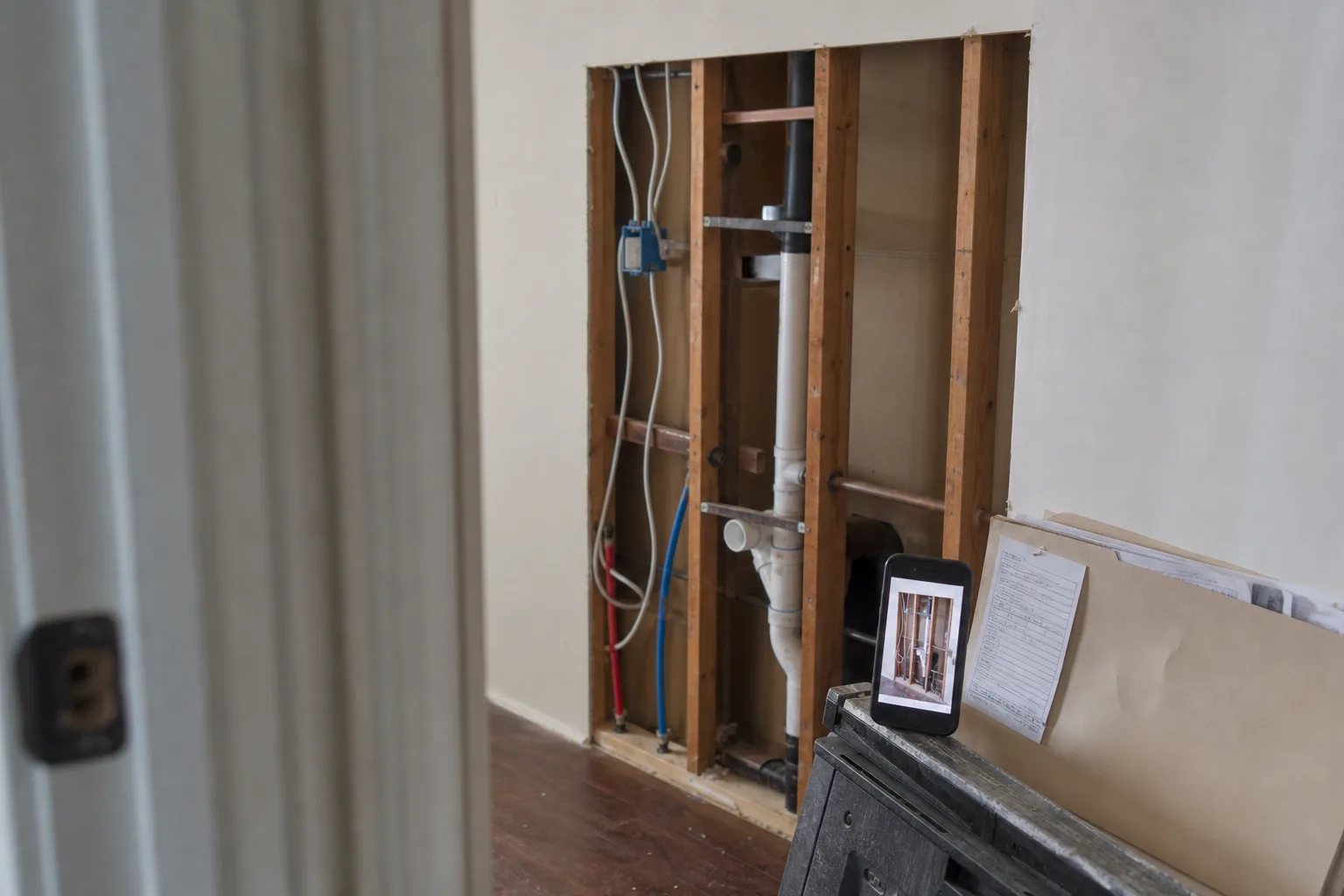
Most of the evidence that decides a repair or renovation dispute was created long before anyone thought of it as evidence: a permit application, a dated photograph of an open wall, a text message confirming a change to the scope, an inspection card signed off by a county official. What separates records that hold up from records that collapse is rarely how convincing they sound when read aloud. It is whether they were made at the time, by someone with no reason to shade them, in a form the local rules will actually recognize. The same file, kept properly, resurfaces at closing.
Made at the time, or made later to explain the time
A contemporaneous record is one created while the events were happening and before the outcome was known. Invoices, delivery tickets, dated payment records, calendar entries, emails sent the same afternoon, and the county's own inspection history all qualify. A timeline typed months afterward does not, however accurate it may be, because it was written by a person who already knew what he wanted it to prove. Contractors, adjusters, licensing boards and judges all weigh the two differently. The practical consequence is that the strongest thing you can do during a job is unglamorous: send short confirming emails and keep every scrap of paper.
Photographs are the clearest case, and also the one most often lost. Framing, blocking, wiring runs, subfloor conditions and waterproofing details are visible for a matter of days, and once drywall goes up they are gone. Nobody reopens a finished wall to settle an argument about what was behind it. Photograph each wall before it is closed, with something in frame that fixes the location, and keep the original files rather than screenshots, since the original carries its own date. That is the step in the whole sequence that cannot be undone.
The recording that helps in one state and disqualifies you in the next
Audio recordings of phone calls are governed by state law, and the states split. Some allow a recording when one party to the conversation consents, which means you may record your own call. Others require the consent of every party on the line, and a recording made without it can be unusable and can expose the person who made it. Calls that cross a state line raise the harder question of which rule applies, which matters when your contractor, supplier or insurance adjuster sits in a neighboring state. Before you press record, check your own state's rule and the other party's.
There is a substitute that works everywhere and takes two minutes. After any consequential call, send an email that repeats what was agreed, including dates, dollar figures and who is responsible for what, and ask the other party to correct anything that looks wrong. Silence in response to a specific written summary carries real weight later, and a correction is useful too, because it tells you now that you disagree rather than at the end of the job. This is why written change orders remain the single most valuable document in a renovation file.
Notice, cure, and the deadline your county sets
Many states require a homeowner to give a builder or contractor written notice of a defect and a defined opportunity to inspect and repair before a claim can proceed, and the notice period, the delivery method and the required contents vary by state. Skipping that step can delay or bar an otherwise sound claim, no matter how good the photographs are. Some states also maintain a recovery fund or bond program administered through the contractor licensing board, which pays homeowners in narrow circumstances and imposes its own filing window. Others have nothing comparable, so the licensing complaint and the civil claim are entirely separate tracks.
Mechanic's lien rules are the other clock, and they run whether you are watching or not. Deadlines for a subcontractor or supplier to record a lien against your property differ by state, as do the notices they must send you first and the form of the release you should obtain when you pay. The Federal Trade Commission oversees consumer protection and deceptive practice rules at the federal level, but the specifics that decide your dispute, licensing, notice, lien timing and small claims dollar limits, are set by your state and administered by your county. Two houses twenty miles apart, across a state line, follow different playbooks.
The part a buyer never sees, and the part an inspector always does
Most states require a seller to complete a written disclosure covering known material defects, past water intrusion, and in many cases prior repairs and unresolved claims. A few sit closer to caveat emptor with statutory carve-outs, and the form itself, its length, its questions and its treatment of permits differ from state to state. A buyer never sees the argument you had with your contractor, the tone of the emails, or the three weeks the crew went missing. What the buyer sees is the disclosure form, the permit record, and whatever the home inspector finds in a couple of hours.
That difference in visibility decides whether a resolved dispute is neutral at resale or a deduction. Work that was permitted, inspected and finaled reads as ordinary maintenance history, and the closed permit is the shortest answer to a buyer's question about who did it and whether it was checked. Work that was settled quietly with a check and no permit reads as unpermitted work, which is what a buyer's agent will call it, and retroactive permitting is slower and more expensive than the original would have been. The dispute costs money once. The missing permit costs money twice.
Appraisers and lenders complicate it further. A finished basement or a converted garage that never appears in the county record may not be counted in the appraised living area, and some lenders will not close on a house with open permits. That is why the most valuable evidence from a dispute is frequently the piece nobody thought of as evidence at all: the final inspection, the certificate of occupancy for an addition, the unconditional lien release from every trade who touched the job. Those documents settle a fight and then quietly add to a sale.
One file, assembled once
Build it chronologically and keep it boring. The signed contract, every change order with both signatures, the permit number and the inspection history, dated photographs of everything that got covered up, the confirming emails, the payment record, and a lien release for each payment, are the spine. Manufacturer warranties on roofing, windows and mechanical equipment often transfer to a new owner only if the transfer is registered within a stated window after the sale, so the registration paperwork belongs in the same folder. A settlement release is the other irreversible step: once signed, it usually closes the claim for good.
The folder does not need to be elaborate, and it is easiest to start on the first day a crew arrives rather than the first day something goes wrong. Check your state's notice-and-cure rule and its recording rule before you need either, and confirm with the county that every permit you pulled shows as finaled. A homeowner who can produce that file answers a contractor, an adjuster and a buyer's inspector from the same drawer.