Throwing Out Groceries You Paid For? What the Habit Costs and What Changed This Year
Food waste costs a household twice, once at the register and once at the curb, and recent changes to date labels and organics collection have moved both numbers.
Anneliese Brandt852 words
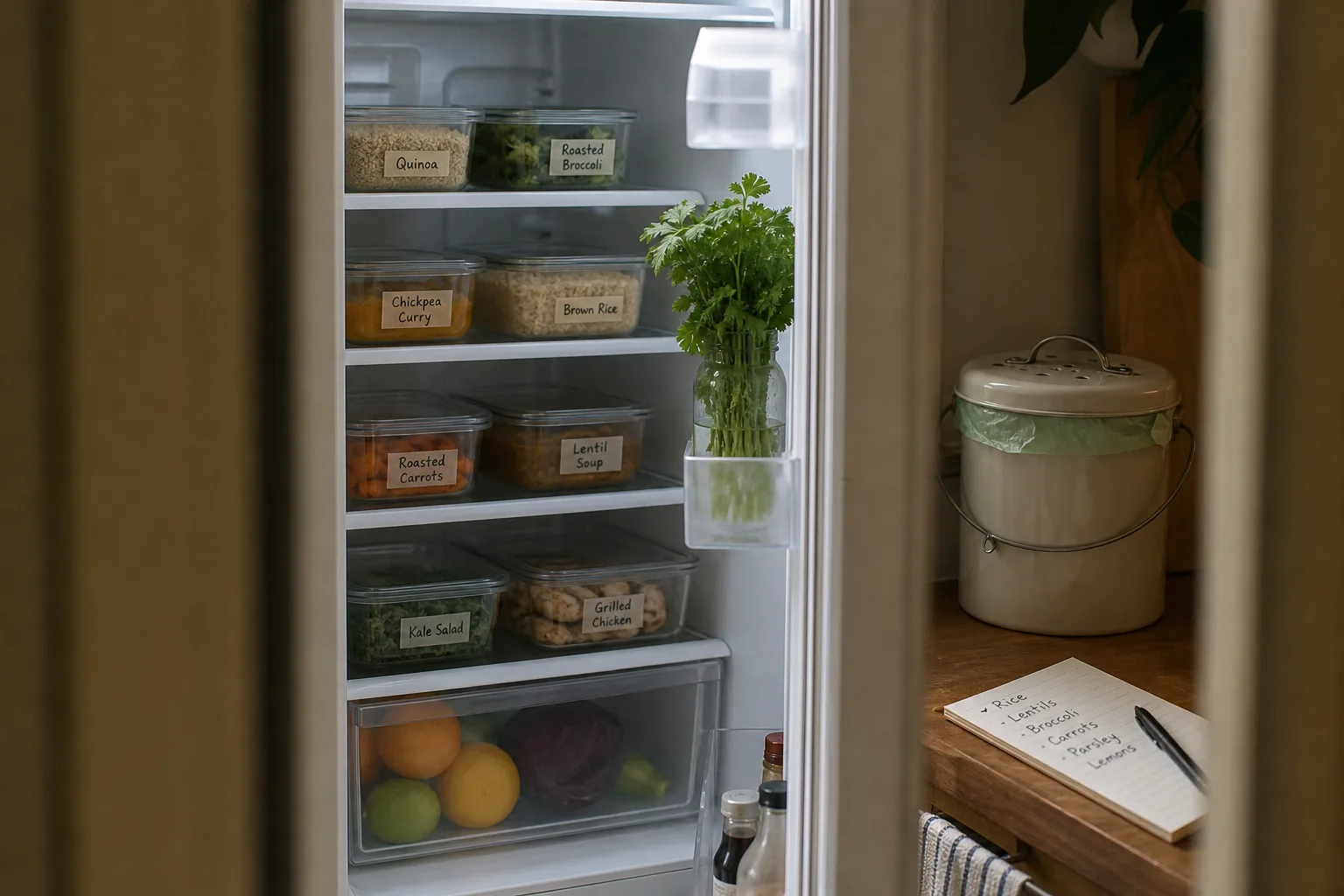
The money leaves in two directions and only one of them shows up on a receipt. You pay for the produce at the register, and then, depending on where you live, you pay again to have the unused half of it hauled away, either through a municipal fee folded into your utility bill or through a private subscription you set up years ago and stopped reading. Between those two payments sits a third cost nobody itemizes: the replacement trip, the one where you buy the same ingredient a second time because the first one went soft behind the milk.
The three costs, and which one you can actually see
Purchase price is the visible number, and it is the smallest useful thing to look at, because the waste rate is what turns a reasonable grocery bill into an unreasonable one. A household that buys well and discards a meaningful share of what it buys is paying a premium on everything that survives. Disposal is the second cost, and it has become less flat than it used to be: volume-based trash pricing, cart-size tiers, and separate organics carts all mean that what you throw out now interacts with what you are billed. The third cost is time, and it compounds quietly.
What drives the total is not appetite or discipline. It is buying cadence, storage capacity, and the gap between when food peaks and when you next plan to cook. A big warehouse-club run is cheaper per ounce and more expensive per meal if a third of it ages out before you reach it. The unit price is real; the yield is what you actually paid.
What changed recently, and why it matters at the cart
Date labeling has been consolidating. The industry has moved steadily toward two phrases, one signaling quality and one signaling safety, and the Food and Drug Administration is the federal authority responsible for how most packaged foods communicate that distinction to consumers. Several states have also tightened what a manufacturer may print and what a retailer may do with stock that has passed a quality date. The practical effect in your kitchen is that the date on a yogurt lid is increasingly a statement about texture rather than a hazard, and treating it as an expiration is now, more often than before, simply throwing out food that is fine.
The second change is collection. Organics diversion has spread from a handful of cities to whole states, which means many households received a third cart in the last few years and a set of rules that arrived on a postcard. Some programs charge by cart size, and a smaller trash cart with a free organics cart can lower a monthly bill outright. Others fold the service in with no visible change. Either way, the disposal side of food waste has become something you can price rather than something you absorb.
The order of operations that does the work
The sequence is unforgiving in one place only, and it is not the shopping trip. It is the hour when something crosses from usable to marginal. Freeze at that hour and you keep the full value; wait two days and you have a compost input, which is better than landfill but is not dinner. So the habit worth building is a standing look at the shelf before the list gets written, not after, because a list drafted against an unknown inventory guarantees duplicates. Shop the gap, not the recipe. Then cook the marginal item first, whatever the plan said.
The second habit is portioning at put-away rather than at use. Splitting a family pack into meal-sized bags on the day it comes home takes ten minutes and converts a single perishable block into four scheduled meals. That step cannot be recovered later. Once the whole pack has been opened, thawed, and half used, the remainder is on a clock you did not choose.
What a buyer sees, and what a buyer never sees
Storage capacity is the one place where waste habits meet the house itself, and the resale math is unsentimental. A deep pantry with real shelving reads as usable square footage and shows in photographs; buyers respond to it and appraisers can point at it. A second refrigerator in the garage does not travel with the sale, adds nothing to the price, and quietly runs up an electric bill that outlasts whatever it was bought to solve. A chest freezer is the same story: useful to you, invisible in the listing.
If you are going to spend money to waste less, spend it on the fixed improvement rather than the appliance. Pull-out shelves, a properly vented pantry, and cabinet depth that lets you see the back row all reduce the forgotten-item problem permanently and survive a change of owner. The behavior change is free; the storage that supports it is the part worth capitalizing.
Run the numbers on your own hauler bill before you change anything else, because the disposal side is the piece most households have never once looked at, and it is the piece that recently moved.