Insuring a Ring You Inherited? Why the Appraisal in the Drawer Is Already Wrong
Homeowners sublimits, scheduled endorsements and standalone policies compared, plus why gold and diamond price moves have quietly dated most appraisals sitting in drawers.
Anneliese Brandt1,024 words
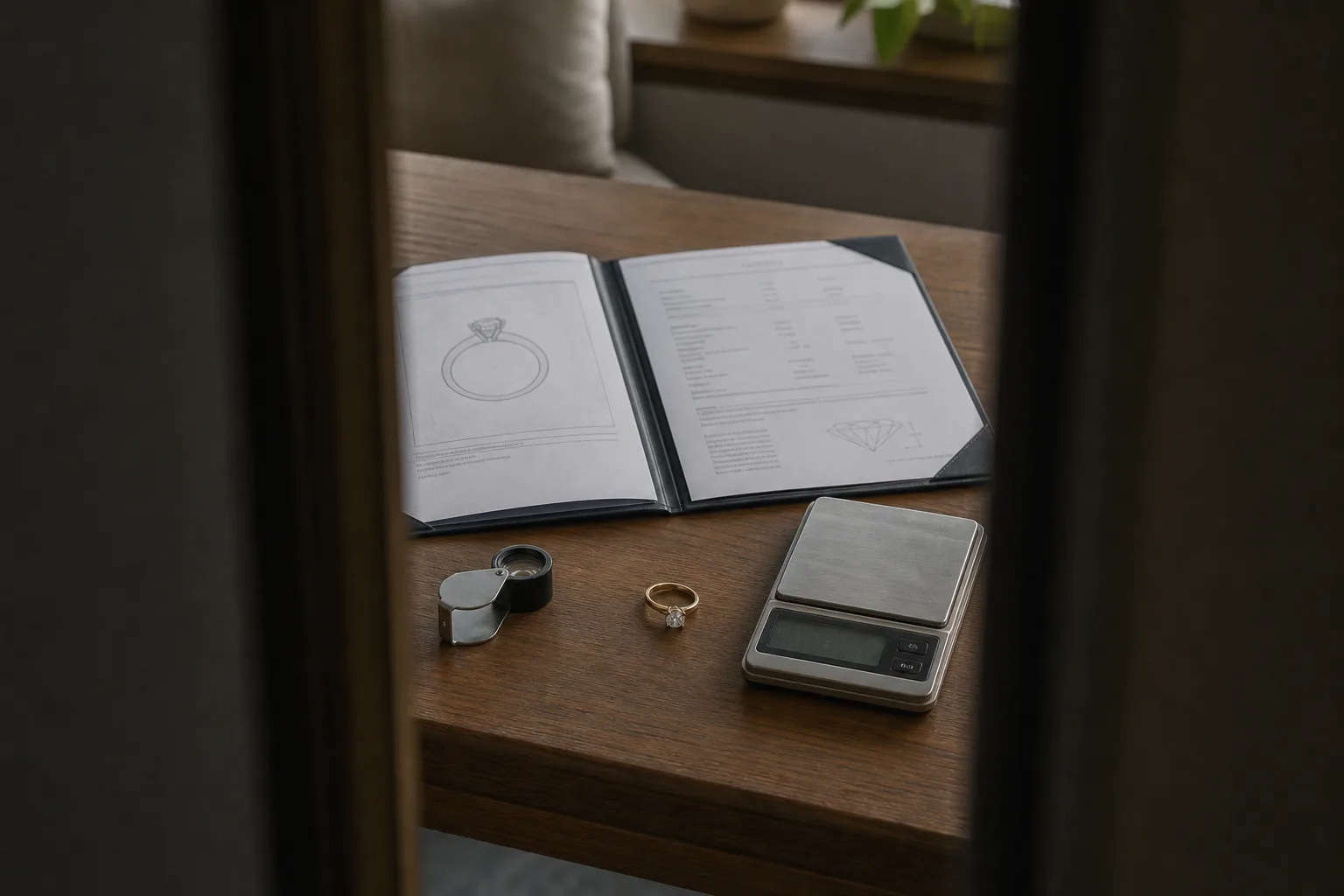
An appraisal is not a permanent document, and the one folded into the ring box with the receipt is doing less work every year it sits there. It records what a specific piece would cost to replace on a specific day, in a specific market, and two of the largest inputs into that number have moved hard in opposite directions recently. Gold is up. Natural diamond resale is not what it was. Anyone deciding how to insure a piece is deciding, whether they know it or not, which of those numbers the insurer will honor.
What the homeowners policy already does, and where it stops
Almost every homeowners or renters policy covers jewelry, and almost every one caps it at a figure that surprises people the first time they read it. The cap is usually a special limit for theft, expressed as a total for all jewelry, watches and furs combined, not per item. A named-perils structure sits underneath that. Fire and theft are covered. Loss, meaning the stone that vanished from the setting somewhere between the parking garage and the restaurant, generally is not, because mysterious disappearance falls outside the listed perils. That distinction decides more claims than the dollar cap does.
For a household whose jewelry adds up to less than the sublimit, this is a settled question and needs no further spending. The base policy handles it, the deductible applies, and the paperwork is already done. The decision only becomes live when one piece, or the sum of several, clears the limit, or when the piece is worn out of the house often enough that loss and damage matter more than burglary. A resale-minded owner should notice which category a piece falls into before shopping for coverage, because the answer changes the product.
A scheduled endorsement against a standalone policy
Scheduling means adding a named item to the homeowners policy with its own limit, usually supported by an appraisal or a bill of sale. It buys open-perils coverage on that item, which is the real upgrade: loss, damage and disappearance come inside the tent, and on many carriers the deductible drops to zero for the scheduled piece. It also keeps everything with one insurer and one renewal date. The trade-off is that a jewelry claim is still a claim on the homeowners policy, and claim history is claim history when the policy comes up for renewal.
A standalone jewelry policy from a specialty carrier separates the two. A theft claim on the ring does not sit in the file that prices the coverage on the house, worldwide coverage is standard, and the underwriting tends to be more fluent about restoration, replacement of a matching stone, and cash settlement. Premiums are quoted as a rate per hundred dollars of value and vary with where you live, since urban theft experience prices differently than rural. The paperwork burden is slightly higher. For a single significant piece, the specialty route is often the cleaner one.
The clause worth reading in either product is the valuation basis. Replacement cost means the insurer will supply or pay for a comparable item at current cost, which can be less than the scheduled figure. Agreed value, sometimes called stated value, means the number on the schedule is the number that pays. Agreed value costs more and it is the one that protects an owner whose piece cannot be shopped for, an inherited setting, a signed period design, a stone cut in a style nobody cuts now.
Why the appraisal expires, and what changed
Appraisals date because they are priced snapshots of two markets that no longer move together. The metal market has run up sharply, so the gold in an old bracelet or a heavy chain is worth materially more than the appraisal from a decade ago recorded, and a total-loss claim settled against that old figure would pay a fraction of what a replacement now costs. At the same time, the arrival of lab-grown stones at scale has reset the price of new diamond goods across a wide band of sizes and qualities, which pulls replacement cost for some center stones down rather than up.
That divergence is the reason carriers increasingly ask for a refreshed appraisal every few years on scheduled items, and the reason an owner should want to comply rather than resist. An appraisal that is too low leaves a gap at claim time. An appraisal that is too high produces premium on value that no longer exists, quietly, every year, with nothing gained. Both errors are avoidable with a re-dating, and the appraiser who does it should state the effective date and the valuation basis on the face of the document.
Basis matters because the same ring carries several defensible numbers. Retail replacement cost, which is what insurance wants, sits well above fair market value, which is what an estate or a charitable donation wants, and both sit above what a dealer will hand over today. The Federal Trade Commission is responsible for the rules governing how jewelry is described and advertised in the United States, and the vocabulary on a modern appraisal, natural against laboratory-grown, treated against untreated, reflects that. A buyer at resale reads those words closely. An insurer reads them too.
The order that keeps the file clean
Get the appraisal from someone independent of the sale, credentialed by a recognized appraisal organization and paid a flat fee rather than a percentage of the value found. Have the report specify the grading of any significant stone, the metal weight, identifying marks, and clear photographs from more than one angle. Then schedule the piece, choose the valuation basis deliberately, and calendar a review at the interval your carrier names. Keep the report where a claim adjuster can reach it, which means not only in the box with the ring.
The step that cannot be walked back is the settlement. Once a claim is paid at a stated figure, the piece is gone and the number is fixed, and an appraisal that expired four gold rallies ago cannot be revised after the fact. Refreshing the document is inexpensive and takes an afternoon.