Hiring Out the Gutters and the Ducts? Five Checks Before the First Visit
The recurring upkeep jobs are cheap next to renovation, and the way you set them up decides what a buyer's inspector finds three years later.
Anneliese Brandt793 words
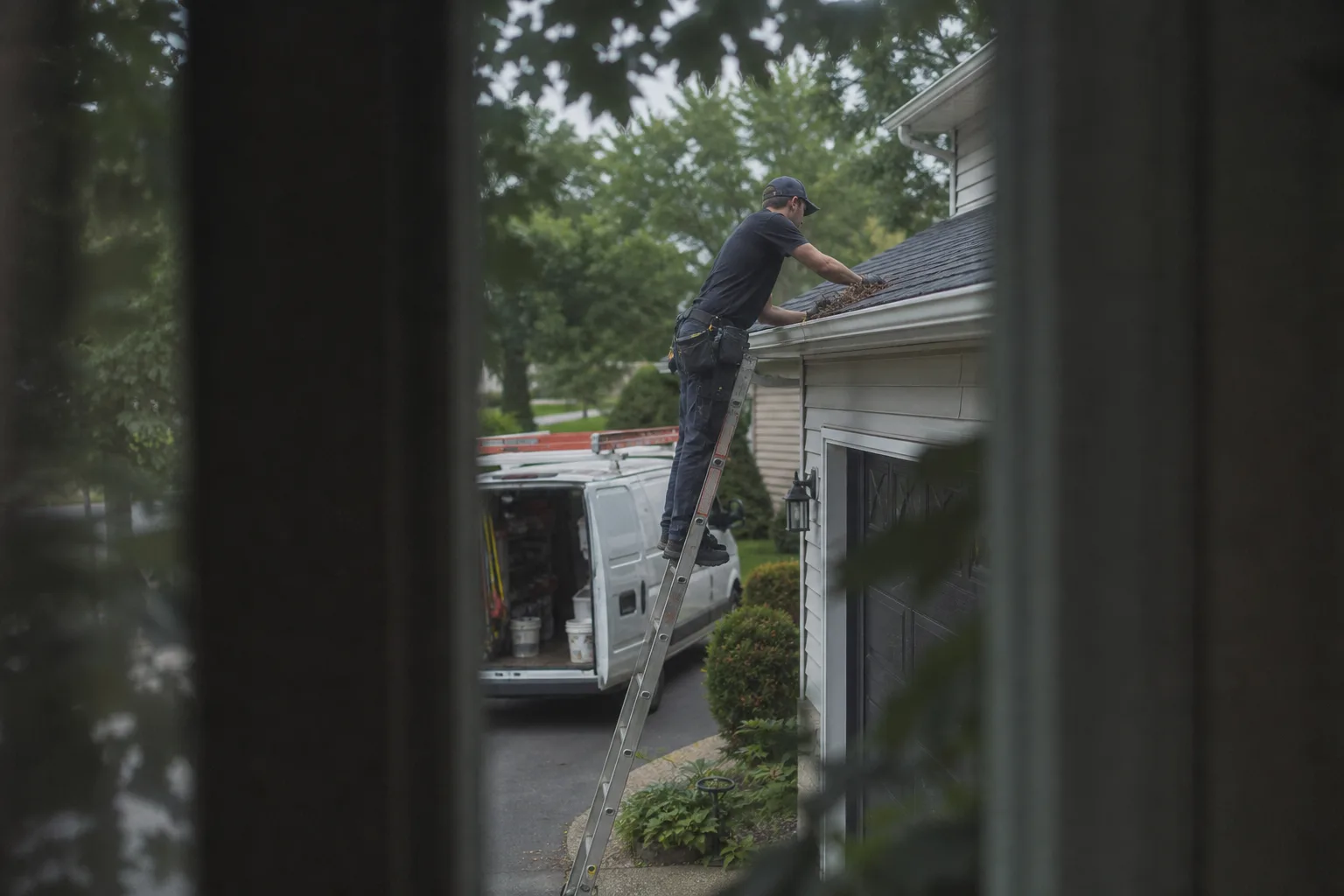
The jobs worth paying for are rarely the glamorous ones, and almost never the ones a buyer walks in and admires. They are the gutters, the dryer vent, the chimney, the crawlspace, the second-story windows nobody has reached since the house changed hands. What a buyer sees is a kitchen. What a buyer's inspector sees is staining at the fascia, lint at the exterior hood, and efflorescence on a foundation wall, and those three findings will cost you more at the negotiating table than the whole decade of service visits would have cost you up front. The setup matters more than the vendor.
Whether the visit produces a record, or just a clean result
A cleaning that leaves no paper behind is worth exactly what it did for the house that week, which is real but invisible. A cleaning that leaves an invoice naming the address, the date, the scope, and the condition found is worth that plus something at closing, because it answers the inspector's finding before the inspector writes it. Ask, before you book, whether you get a written report with photographs or a card in the door. The good operators in gutter work, duct work and chimney work already do this, and they will say so plainly. File the invoices in one folder, by year, and the folder becomes a document a buyer's agent can hand over.
Who owns the ladder risk, and whether the coverage is current
Most recurring upkeep involves height, confined space, or both, and the reason those jobs are worth paying for is precisely that they are the ones where an untrained person gets hurt. The Occupational Safety and Health Administration is responsible for fall protection standards in the trades, and a legitimate crew works to them because it has to. Your part is narrower: ask for a certificate of insurance sent directly from the agent, check that general liability and workers' compensation are both listed, and check the expiration date rather than the fact of the document. Homeowners policies handle a guest's fall differently than a worker's, and you do not want to learn the distinction from an adjuster.
What the scope actually includes, before the truck is in the driveway
Gutter cleaning is the classic example, because the phrase covers at least four different jobs: clearing the troughs, flushing the downspouts, checking the hangers and the pitch, and hauling the debris away. Some crews do the first and leave the rest, including a wet pile of shingle grit on your beds. Dryer vent service splits the same way, between vacuuming the accessible run and disassembling the exterior hood. Get the boundaries written down in the estimate, in ordinary words, and get the debris removal named explicitly. This is the single cheapest correction available to you, and once the crew is on site the leverage is gone.
The cadence your house needs, which is not the cadence on the flyer
Twice a year is a marketing number. A house with two mature oaks over the roofline needs the gutters cleared three or four times, weighted heavily toward late fall, and a house on an open lot may genuinely be fine annually. A family of five running the dryer daily is on a different vent schedule than a couple running it twice a week. Walk your own conditions before you sign anything recurring: tree cover, roof pitch, laundry volume, whether the exterior wall run is long and full of elbows. Then buy the schedule that matches, and let the vendor tell you if the interval is wrong.
The week-to-week logistics that decide whether the service survives year two
Most recurring upkeep dies of friction rather than dissatisfaction. Someone has to be home, or the gate has to be unlocked, or the dog has to be inside, or the car has to be off the apron, and after four rescheduled visits the household quietly stops booking. Solve it once, at the start: agree on a text the day before, a lockbox or a keypad code for the side gate, a standing note about the dog, and a window rather than a time. Ask who you actually reach when the crew does not show, an office line or a cell phone. Continuity is what makes the record worth having.
None of this raises an asking price the way a new range does, and that is the point of it. The upkeep jobs protect the number you already have, quietly, by keeping the water off the sheathing and the lint out of the wall, and by producing a stack of dated invoices that shortens the inspection conversation to a sentence. Set the five checks once, at the start, and the whole arrangement runs without you thinking about it again.