Same Cart, Bigger Total? Five Checks That Find Where the Grocery Money Actually Went
Package sizes, protein prices, cooking energy, spoilage and digital-only discounts each move a weekly food budget, and each one is checked differently.
Hector Villanueva1,106 words
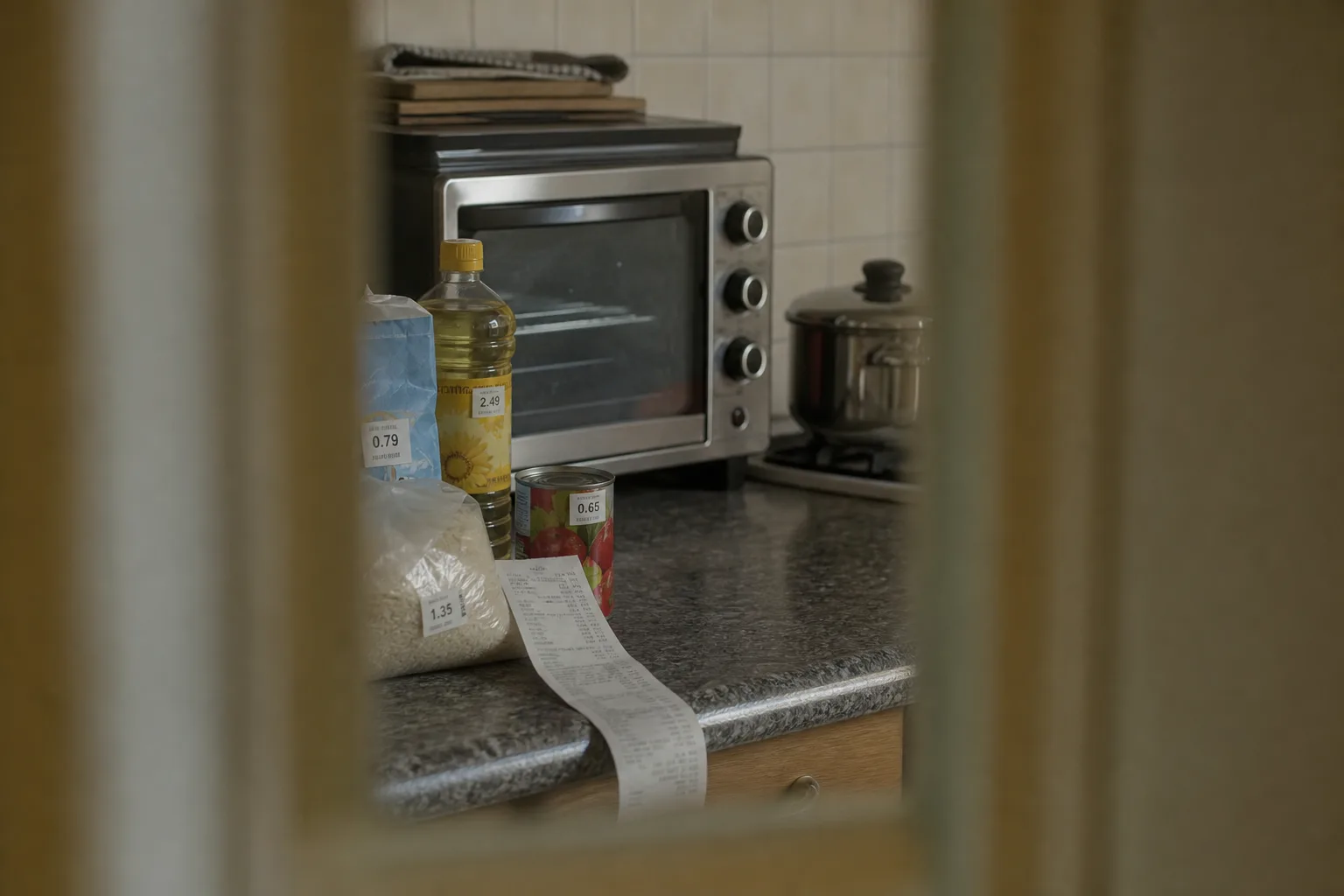
A weekly food budget fails quietly. Nobody decides to spend forty dollars more; the receipt just arrives longer than it used to, with roughly the same items on it, and the difference gets written off as prices in general. That explanation is useless, because it cannot be acted on. The bill is made of five separate mechanisms, and each one is measured in a different place: the shelf tag, the protein case, the electric meter, the trash can, and the app the store now uses to set what you actually pay. Check them in that order.
The shelf price held and the unit price did not
The first check is the small print under the price, the per-ounce or per-pound figure, because that is where several years of change have landed. Manufacturers facing higher input costs have an easier lever than the sticker: the package. Coffee that was a pound became twelve ounces, cereal boxes lost depth rather than height, and ice cream containers gave up volume while keeping the footprint. The Bureau of Labor Statistics, which tracks food prices as part of consumer price measurement, accounts for size changes in its methods, but your shopping habit does not. If you buy by memory of the item rather than by the unit line, the reduction is invisible until the box runs out sooner.
The correction takes one trip. Photograph the unit price of your fifteen or twenty repeat items, the staples you buy without thinking, and compare store brand against national brand on that number rather than on the shelf price. You will find two or three items where the gap is wide enough to matter weekly and a dozen where it is noise. Fix the wide ones and leave the rest alone. This is a one-time audit with a durable payback, which is rare in household spending.
Protein is the swing, and the swing has a reason
Across most weekly grocery budgets, the meat and dairy case moves the total more than anything else, because the quantities are meaningful and the per-pound numbers are high. It is also the section where recent movement has been sharpest and least uniform. Beef and eggs have followed supply stories of their own, herd size in one case and disease response in the other, while chicken and pork have generally behaved differently. That matters because it means the category did not rise as a block. Substitution inside the protein aisle still works, which was not obviously true when everything moved together.
The practical check is to know your household's per-pound ceiling before you stand at the case. Decide what a pound of cooked protein is worth to you, count dried beans and eggs and frozen fish as candidates alongside the fresh cuts, and treat anything above the ceiling as an occasional purchase rather than a weekly one. Whole chickens, chuck cuts and pork shoulder reward the cook who owns time; the price per pound falls as the knife work rises. That trade is real and it is yours to accept or decline.
What the cooking itself draws
Food budgets are usually counted at the register and never at the meter, which leaves out a genuine cost. An electric oven preheating for fifteen minutes and running for another forty is one of the larger single draws in the house, comparable to the dryer, and the retail rate per kilowatt hour in much of the country has moved up over the past few years while grocery inflation was getting the attention. Heating the full cavity of an oven to cook one tray is where the waste sits. That is the specific inefficiency worth targeting, not cooking in general.
The countertop appliances people bought for speed turn out to be an energy answer as well. A small convection oven or air fryer heats a fraction of the volume and skips most of the preheat, an electric kettle puts almost all of its draw into the water, and a lid on a pot cuts the time to boil enough to notice on a stovetop. Batching matters too: filling the oven once for three dinners spreads a fixed heating cost across three meals. None of this repays a new appliance quickly on its own, so buy on replacement need and take the savings as a bonus rather than a business case.
The line item you throw away
Spoilage is the only grocery cost that is one hundred percent loss, and it is the one nobody enters in the budget. A bag of salad that turns, half a pack of cilantro, the second half of a rotisserie chicken pushed to the back of the shelf: each is small, and together they are often the difference between the budget you set and the one you hit. The check is to spend one week noting what goes in the trash, not judging it, just recording it. The pattern is usually narrow and usually the same three or four items.
What that record buys you is a targeted fix instead of a vague resolution to waste less. Herbs move to the freezer in oil, greens get bought in the sturdier form, and the second half of the chicken gets a scheduled destination on Wednesday rather than a hope. Refrigerator temperature is worth confirming while you are at it, since a unit running warm shortens everything's life and costs you twice. Cold storage that works is the cheapest preservation you own.
The shelf price is now set in an app
The biggest recent change in how much a given cart costs is that the posted price and the price you pay have separated. Chains have moved discounts into loyalty accounts and digital coupons, so the same item rings up at two different totals depending on whether the shopper clipped anything. Paper circulars have thinned accordingly. Delivery and pickup add their own layer, with fees, service charges and occasionally a different price file than the one in the store.
Check which tier you are actually buying at. Loading the digital offers before a trip takes a few minutes and applies to items you were buying anyway, which makes it the highest return per minute available in this whole exercise. Then compare one full delivery order against the same order collected in person, fees included, and decide whether the convenience is worth its measured price.
Run the five checks once and you will know which mechanism is driving your particular bill, because it is rarely all five. Most households find one dominant cause and one small one. That is a short list to work with, and it stays true for months.